Smart Workplace Management for Multi-Tenant Spaces
Corporate centers, business parks, and free trade zones host dozens of tenants with diverse needs. Parso provides a unified booking and management platform that serves every tenant while giving property managers full visibility.
Book a DemoIndustry Challenges
Multi-Tenant Complexity
Different companies, different policies, different schedules — all sharing the same parking, common areas, and meeting rooms. Coordination is a nightmare.
Shared Amenity Conflicts
Conference rooms, shared lobbies, and common areas are overbooked or underutilized. No one has a clear picture of actual demand.
Parking Allocation at Scale
Distributing parking spots fairly across multiple tenants, managing visitor parking, and handling peak-hour congestion requires more than a spreadsheet.
Tenant Satisfaction & Retention
Modern tenants expect digital amenities. If your campus doesn't offer smart booking tools, tenants will look for properties that do.
How Parso Solves It
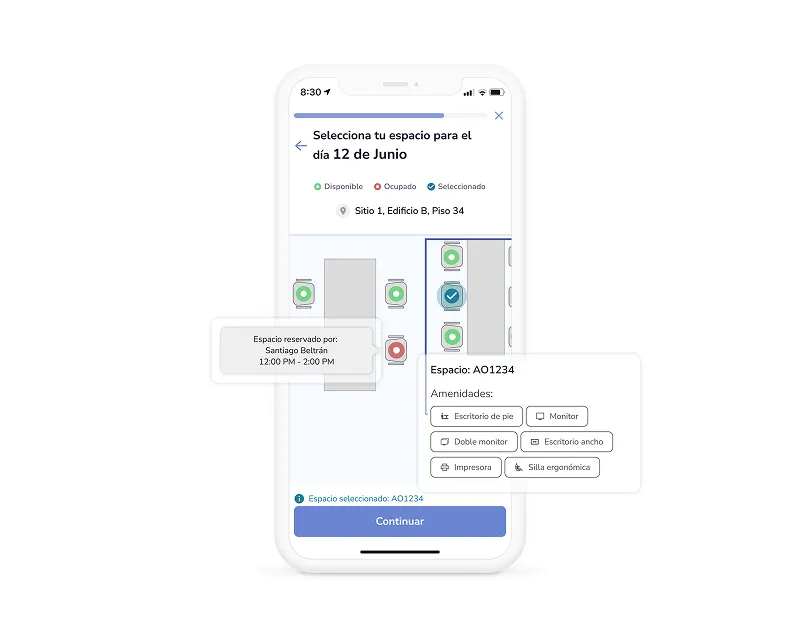
Tenant-Aware Multi-Company Platform
Each tenant gets their own workspace within Parso — their own booking rules, custom brand colors, and user base — while property managers see the consolidated view across all tenants. Visitor registration with pre-registration, ID scanning, and host notifications works per-tenant.
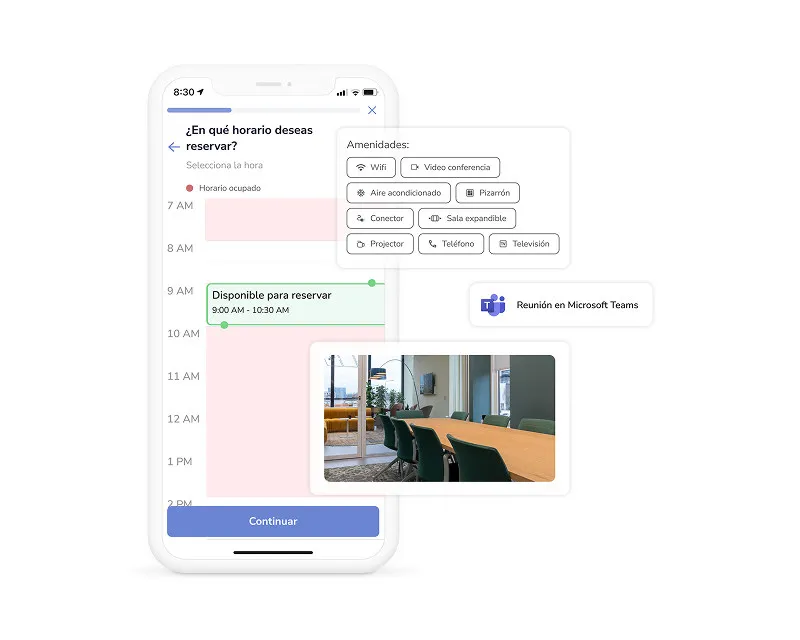
Shared Amenity Management
Manage shared conference rooms, coworking spaces, and common areas with fair-use policies and real-time availability visible to all authorized users.
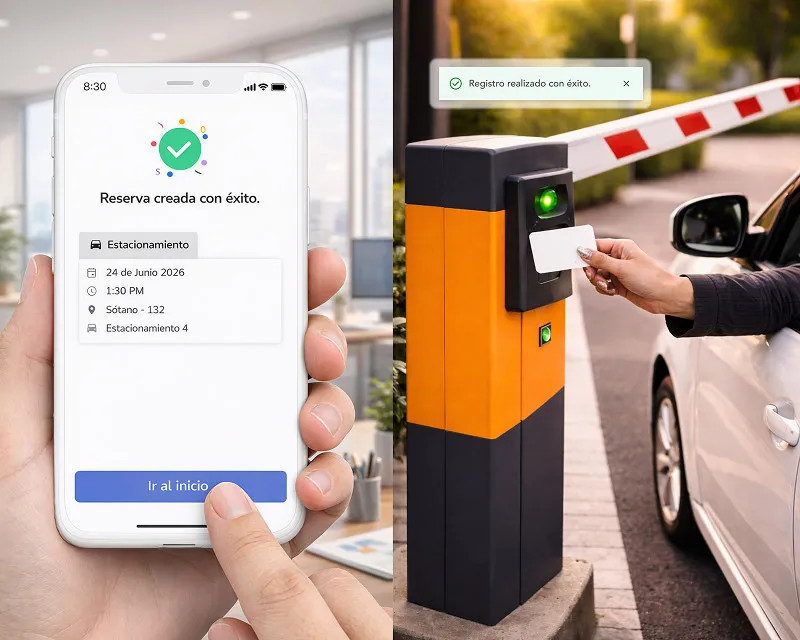
Campus-Wide Parking
Allocate parking by tenant, building, or priority. Employees reserve spots in advance, and gate integration ensures smooth access without congestion.
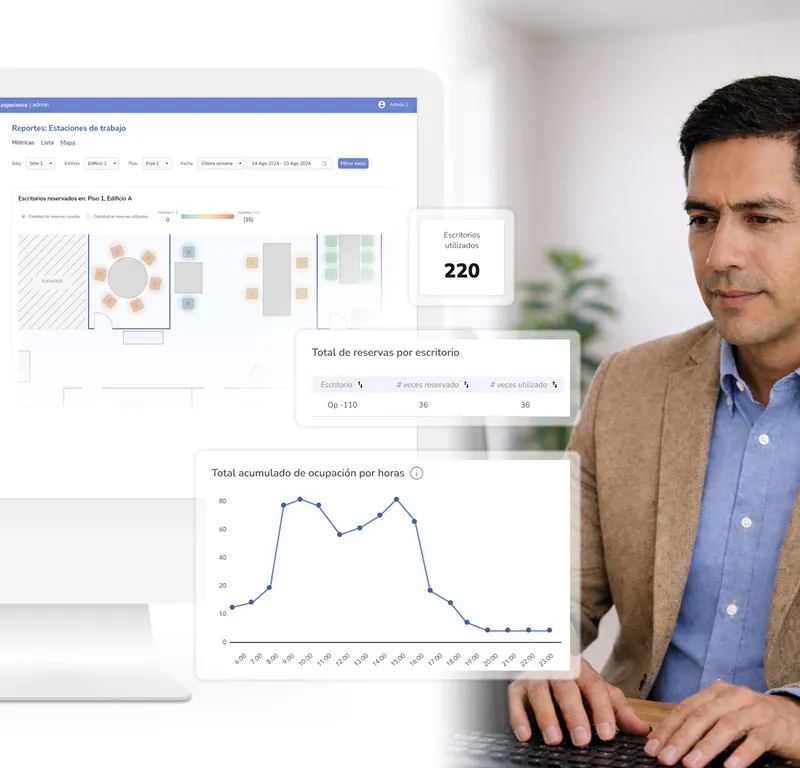
Reporting & Tenant Analytics
Reservation and occupancy reports by tenant, building, and floor. Space usage heatmaps and frequency analysis. Export to Excel, PNG, or connect to PowerBI via API for custom property management dashboards.
1 platform
serving every tenant
Fair, automated
parking allocation
Increase
tenant satisfaction and retention
Customer story
Experian is a data and technology company, not a business park operator. But the problem it solved is the one property and Facilities teams face on any multi-building campus: one team administering many locations with consistent rules and a consolidated view of how space is really used. This cross-industry example shows how it got there.

Visitor management in business parks and free trade zones: one campus, many companies
A corporate center or zona franca runs like a small city: shared gates, shared parking, shared rooms and dozens of companies with their own policies. These are the moments where a single platform pays off.
Main gate
The morning rush at the campus entrance
Employees of many companies arrive in the same hour, through the same gates. With access control integration, only people with an active parking reservation get through, and the badge or plate scan checks the reservation in automatically. Each person only sees the parking options available to their company and building, so nobody circles the campus looking for a spot that belongs to another tenant.
Visitors
A guest for a tenant in building C
The tenant's employee registers the guest. The invitation includes directions to the right building, floor and parking area, with clear routes inside the park. At the entrance the ID is scanned and the host is notified the moment the guest checks in. Each tenant manages its own visitors, while campus security keeps one log of who entered, when and to see whom.
Shared amenities
The shared conference center
Shared rooms and event spaces are booked under fair-use rules: restricted to certain groups, approval required for premium spaces and a maximum duration per booking. Spaces blocked for maintenance or a campus event disappear from search automatically, so no tenant books a room that won't be available.
Events
A tenant's training week
A tenant hosting a multi-day program uploads its guest list from Excel. Invitations go out automatically with a validity that covers every session, and each guest still goes through the same watchlist screening and access rules as an individual visitor.
Tenant review
The quarterly conversation with tenants
Reservation and occupancy reports by tenant, building and floor show how shared rooms and parking are really used. Parking allocation can be renegotiated on data, not on whoever complains loudest, and the reports export to Excel or feed Power BI through the API.
Operations
Requests that arrive with the right location
Maintenance issues reported from the app, Teams or Slack carry the building and floor they come from. AI categorizes each request, applies your routing rules and tracks SLAs by category and location, so the operations team sees which buildings generate the most work.
Campus parking, shared amenities and tenant reporting in one platform
Tenants' employees use one app; the property and operations team manages every building from one console.
Campus parking management by tenant and building
Capacity per location, allocation by group, gate integration, automatic release and arrival data from access control.
Visitor management for business parks
Invitations with campus directions, ID scanning, watchlists, bulk registration and an offline front desk app for the gatehouse.
Shared meeting room and event space booking
Group restrictions, approvals for premium rooms, maximum durations, room displays and usage heatmaps across buildings.
Coworking and flexible desk booking
Interactive floor maps for shared coworking areas, with booking limits and priority access by group.
Cafeteria management for shared food services
Several cafeterias from one dashboard, each with its own menu and hours, plus consumption data you can export for reporting or invoicing.
AI service requests across buildings
Requests from the app, Teams or Slack, routed by building and floor, with SLAs per category and location.
What to look for in business park and multi-tenant building software
Single-company booking tools fall apart when the users work for forty different employers. Check these points before you choose.
Real separation between tenants
Each tenant needs its own rules, users and branding, with data isolated per tenant, while the property team keeps a consolidated view.
Configuration per building
Capacity, booking rules and access groups set per location, because tower A and the warehouse park don't run the same way.
Parking enforced at the gate
Allocations by tenant only hold if the gate respects them. Look for vehicular access control integration that is already running on corporate campuses.
Visitor flows designed for a campus
Directions to the right building and parking area, a gatehouse that keeps working offline and one visitor log across every entrance.
Fair-use controls for shared amenities
Group restrictions, approvals, maximum durations and automatic release, so one tenant can't monopolize the auditorium.
Reporting by tenant, building and floor
Occupancy and reservations you can take to a tenant meeting, with exports to Excel and an API for Power BI.
Answers for your tenants' IT teams
Enterprise SSO via Azure AD / Entra ID, Okta, Google Workspace or Active Directory, audit trails and Azure hosting with a web application firewall and 24/7 monitoring.
Built for multinational tenants
Free trade zones host companies from many countries. An interface in Spanish, English and Portuguese removes one adoption barrier.
How Parso is rolled out on a multi-tenant campus
Parso goes live in days, not months. The exact timeline depends on your buildings and integrations, and we define it clearly in your proposal.
Discovery
Map buildings, gates, parking agreements per tenant, shared amenities and the security flow at each entrance.
Configuration
Set up locations, tenant groups, parking capacity by tenant and building, amenity rules and visitor policies.
SSO and integrations
Connect identity providers, calendars and the campus vehicular access control system.
Pilot
Start with one building or a few tenants and adjust allocations and grace periods with real usage.
Rollout
Extend to the rest of the campus and use tenant-level reports to keep allocation fair.